
Identifying Small Insects in Hair
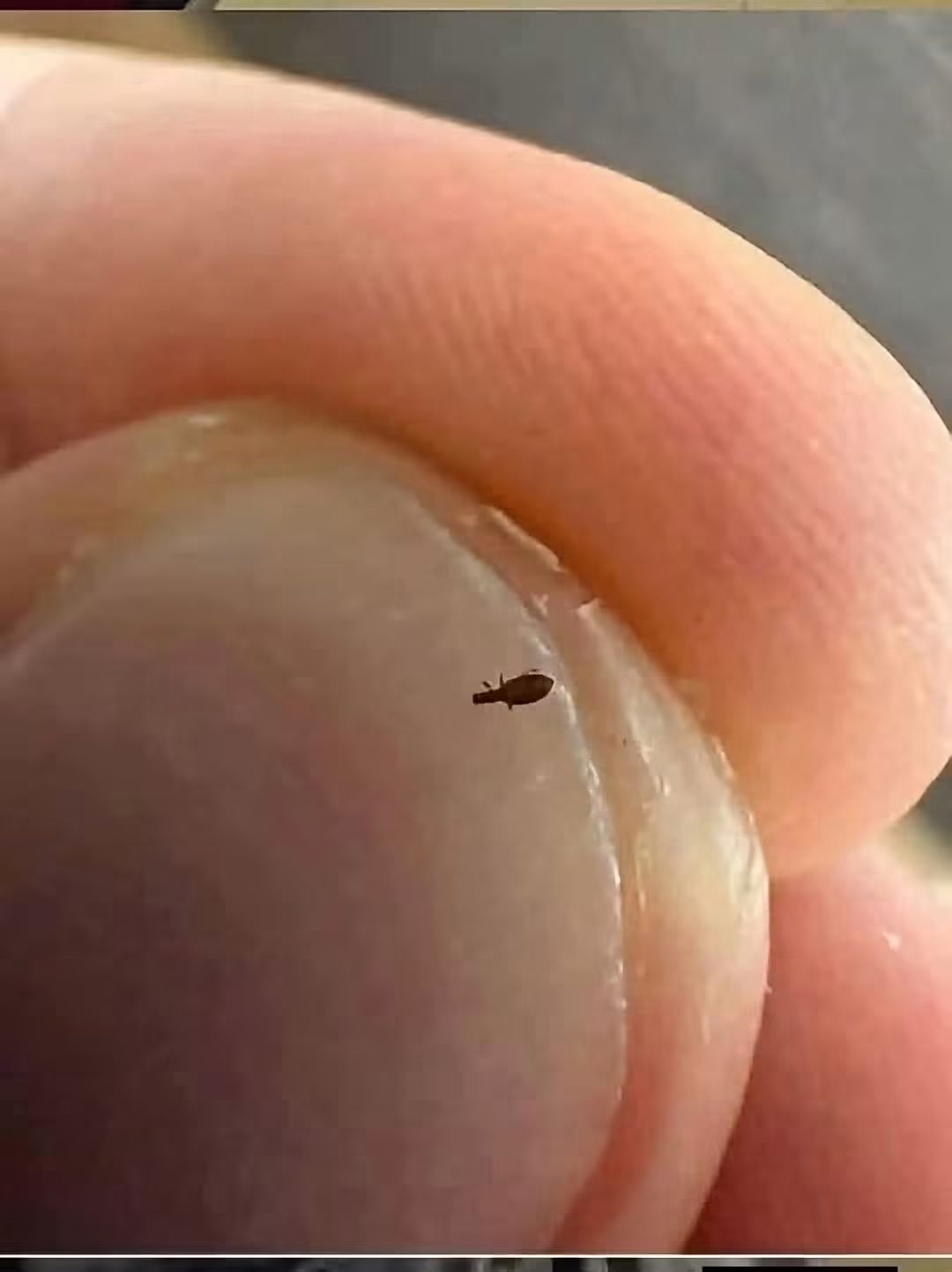
Discovering a small insect in your hair can be unsettling. While the image shows a close-up of a dark-colored insect on a finger, similar tiny creatures can be found in hair. The most common culprits are head lice and, less frequently, mites.
Head Lice
Head lice are small, wingless insects that live on the human scalp and feed on blood. They are typically greyish-brown and about the size of a sesame seed. Lice cannot fly or jump, but they crawl very quickly. Their eggs, called nits, are tiny and oval-shaped, often mistaken for dandruff or hair product residue. They are usually laid close to the scalp on hair shafts.
Mites
While less common on the scalp, certain mites can cause itching and irritation. For instance, scabies mites burrow into the skin, causing intense itching, and can sometimes be found in hairy areas. However, the insect in the image does not strongly resemble a typical scabies mite, which is microscopic.
What to Do If You Find a Bug
If you find an insect in your or a friend’s hair, it’s important to identify it correctly. For suspected lice, over-the-counter or prescription treatments are available. It’s crucial to treat all affected individuals in the household simultaneously and to clean bedding, clothing, and other items that may have come into contact with the infested person.
Key steps include:
- Visual Inspection: Carefully examine the scalp and hair, especially around the nape of the neck and behind the ears, for live lice or nits.
- Treatment: Use a fine-toothed comb to remove lice and nits, or use medicated shampoos and lotions specifically designed for lice removal.
- Environmental Cleaning: Wash bedding, hats, and clothing in hot water and dry on a hot cycle. Items that cannot be washed can be dry-cleaned or sealed in a plastic bag for two weeks.
- Prevention: Avoid sharing personal items like combs, brushes, and hats to prevent the spread of lice.
If you are unsure about the identification or the best course of action, consult a healthcare professional or a dermatologist.