
Is Ginger Really the Most Parasite-Contaminated Vegetable? What You Need to Know
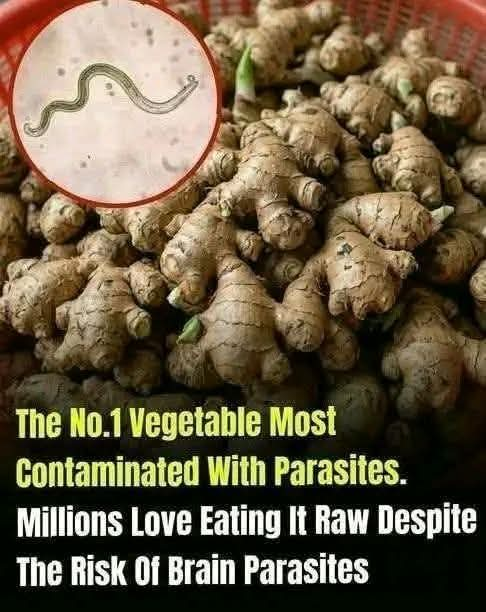
Fresh ginger has been used for centuries in cooking and traditional remedies, but a disturbing claim has recently been circulating online. Viral posts have described ginger as the “most parasite-contaminated vegetable” and have even connected it to dangerous infections.
The alarming photos and warnings can easily make people wonder whether their favorite ginger tea, stir-fry, or homemade recipe could be putting their health at risk.
Fortunately, the reality is much less dramatic.
Why Does Ginger Come Into Contact With Microbes?
Ginger is a root that grows underground, which means its outer surface naturally comes into contact with soil, moisture, and microorganisms.
That isn’t unusual.
Other underground vegetables, including carrots, potatoes, radishes, and beets, also grow in soil and can carry dirt or microorganisms on their surfaces before they are washed and prepared.
The fact that ginger grows underground does not automatically mean that it is dangerous to eat.
As with other fresh produce, the main concern is whether contamination occurs during growing, harvesting, transportation, storage, or preparation.
Is Ginger Especially Contaminated With Parasites?
There is no good scientific evidence to support the claim that ginger is uniquely or especially contaminated with parasites compared with other vegetables.
Fresh produce can occasionally become contaminated with microorganisms or parasites, but the risk is generally influenced by environmental and food-handling conditions.
Factors such as contaminated irrigation water, animal or human waste, soil conditions, harvesting practices, transportation, storage, and poor hygiene can all play a role.
In other words, the potential contamination risk is more complicated than simply identifying one vegetable as the “dirtiest” or “most contaminated.”
How Can Fresh Produce Become Contaminated?
Fresh fruits and vegetables can become contaminated at several points between the farm and your kitchen.
For example, contamination can occur through:
Contaminated soil or irrigation water
Contact with animal waste
Poor hand hygiene during harvesting
Unsanitary transportation or storage
Cross-contamination during food preparation
Inadequate washing before consumption
These risks aren’t unique to ginger.
Because fresh produce is often eaten raw or only lightly cooked, proper
handling is an important part of food safety.
What About Parasites and Dangerous Infections?
Parasites can sometimes contaminate fresh produce, but that does not mean that eating ginger normally causes parasitic infections.
Viral posts often take a legitimate food-safety concept—fresh produce can become contaminated—and exaggerate it into a claim about one particular food.
That distinction is important.
A food can have a potential contamination risk without being inherently unsafe. Food safety is largely about reducing exposure through proper agricultural practices, sanitation, storage, preparation, and cooking when appropriate.
There is also a major difference between finding microorganisms or contamination on the surface of a food and proving that eating that food will cause an infection.
Should You Stop Eating Fresh Ginger?
For most people, there is no reason to stop eating fresh ginger simply because of these viral claims.
Instead, treat ginger like other fresh produce and handle it properly.
Before using fresh ginger, remove visible dirt and rinse the surface under clean running water. If you are peeling it, wash it before peeling so that contaminants on the outside aren’t transferred to the edible portion by your hands or utensils.
It’s also important to keep fresh produce separate from raw meat, poultry, and seafood during food preparation to reduce the possibility of cross-contamination.
How to Clean Fresh Ginger Properly
Cleaning ginger doesn’t need to be complicated.
Step 1: Inspect the Ginger
Look for visible dirt, damaged areas, mold, or signs of spoilage. Discard ginger that appears spoiled rather than attempting to salvage questionable portions.
Step 2: Rinse It
Place the ginger under clean, running water and gently rub the surface to remove dirt and debris.
A clean produce brush can be useful for firm, irregular surfaces when appropriate.
Step 3: Peel If Desired
Many recipes call for peeled ginger, while others use it with the skin removed or left on depending on preparation.
If you peel it, use a clean utensil and avoid allowing the unwashed exterior to come into contact with food after preparation.
Step 4: Keep Your Kitchen Clean
Wash your hands, cutting board, knife, and other surfaces after handling produce and before preparing other foods.
These simple habits are much more useful than worrying about viral claims that single out one vegetable.
Does Cooking Ginger Kill Parasites?
Cooking can reduce or eliminate many foodborne pathogens, although the effectiveness depends on the specific organism, food, and cooking conditions.
If ginger is being added to a cooked dish, thorough cooking provides another food-safety measure.
However, cooking should not be viewed as a substitute for basic hygiene. Starting with clean produce and preventing cross-contamination remain important.
The Bigger Food-Safety Picture
One of the biggest problems with viral food warnings is that they often remove important context.
Saying that ginger can come into contact with microorganisms is technically different from saying that ginger is highly contaminated with parasites.
The first statement reflects a general reality of fresh produce. The second requires strong evidence.
Without reliable evidence showing that ginger has an unusually high parasite contamination rate, there is no scientific basis for treating it as uniquely dangerous.
What Should Consumers Actually Do?
Instead of worrying about sensational claims, focus on practical food-safety habits.
Wash fresh produce before eating or preparing it.
Keep raw animal products away from ready-to-eat foods.
Wash your hands before and during food preparation.
Clean cutting boards, knives, and countertops regularly.
Store food appropriately and discard visibly spoiled produce.
These habits apply to ginger just as they do to other fresh fruits and vegetables.
Frequently Asked Questions
Is ginger the most parasite-contaminated vegetable?
There is no reliable scientific evidence establishing ginger as the “most parasite-contaminated vegetable.” Contamination risk can vary according to growing, harvesting, water, transportation, storage, and handling conditions.
Can fresh ginger carry microorganisms?
Yes. Because ginger grows underground, its surface can come into contact with soil and microorganisms. Proper washing and food handling help reduce potential contamination.
Should I wash ginger before peeling it?
Yes. Washing ginger before peeling can help prevent dirt or microorganisms on the outer surface from being transferred to the edible portion during preparation.
Can ginger cause a parasitic infection?
There is no basis for claiming that eating properly handled ginger normally causes parasitic infections. Like other fresh produce, ginger can potentially become contaminated under certain environmental or handling conditions.
Is fresh ginger safe to eat?
Fresh ginger is commonly used as a food ingredient. As with other fresh produce, following basic food-safety practices—such as washing it under running water, preventing cross-contamination, and storing it appropriately—is important.
Final Thoughts
The viral claim that ginger is the “most parasite-contaminated vegetable” sounds frightening, but the evidence does not support treating ginger as uniquely dangerous.
Ginger grows underground, so its surface can naturally come into contact with soil and microorganisms. However, that is also true of many other root vegetables.
The more important issue is how food is grown, handled, washed, stored, and prepared.
So, rather than throwing away your fresh ginger because of an alarming social media post, use sensible food-safety practices. A few simple habits in the kitchen can go a long way toward reducing the risks associated with contaminated fresh produce