
Never Throw Away Banana Peels Again!
The humble banana is a staple in many households, cherished for its sweet taste and nutritional value. However, what if we told you that you might be discarding one of its most potent parts? The banana peel, often relegated to the compost bin, is brimming with nutrients and compounds that can be harnessed for various beneficial uses. Beyond just eating the fruit, a growing trend involves infusing or fermenting bananas, both whole and peeled, in water to create powerful liquids. This article delves into the fascinating world of banana infusions and fermentations, exploring their potential applications and how you can experiment with them at home.
The Nutritional Powerhouse of Bananas and Their Peels
While the banana fruit is well-known for its potassium content, it also offers a good source of vitamins C and B6, manganese, and dietary fiber. The peel, however, often contains even higher concentrations of certain nutrients. For instance, banana peels are particularly rich in potassium, phosphorus, magnesium, and calcium. These minerals are vital for plant growth and can also contribute to various natural home remedies and garden applications.
Beyond minerals, banana peels also contain antioxidants, polyphenols, and carotenoids, which are beneficial compounds. When these peels are steeped in water or allowed to ferment, these valuable elements can leach into the liquid, creating a nutrient-dense solution that can be utilized in several creative ways.
Understanding Banana Infusions and Fermentations
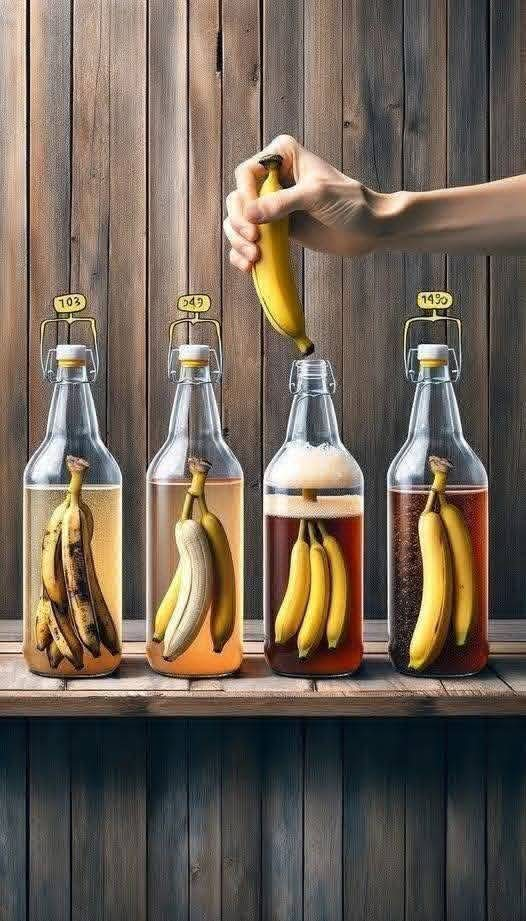
The image vividly illustrates an experiment in progress, with bananas submerged in liquid within glass bottles, exhibiting different stages of infusion or fermentation. Let’s break down what these processes entail:
Banana Infusion
An infusion is a simpler process, similar to making tea. It involves steeping banana pieces or peels in water, often hot, to extract their soluble compounds. This method typically results in a liquid that carries the essence, flavor, and some nutrients of the banana. The clear to amber liquids seen in the first two bottles in the image suggest an infusion process, where the bananas have released their color and some soluble components into the water.
Banana Fermentation
Fermentation, on the other hand, is a more complex biological process where microorganisms (like yeasts and bacteria) convert carbohydrates into alcohol or organic acids. When bananas are submerged in water and allowed to sit for an extended period, especially in a sealed environment, natural fermentation can occur. This process can break down complex compounds, making nutrients more bioavailable and creating new beneficial substances. The darker liquid and the presence of foam in the third bottle in the image are strong indicators of active fermentation, where gases are being produced by microbial activity.
Practical Applications of Banana Water
So, what can you do with these banana-infused or fermented liquids?
- Natural Plant Fertilizer: This is perhaps the most popular use. The potassium, phosphorus, and calcium leached from bananas and their peels make an excellent, all-natural fertilizer for houseplants and garden plants. Potassium is crucial for flowering and fruiting, while phosphorus aids in root development. Simply dilute the banana water and use it to nourish your plants.
- Compost Activator: The nutrient-rich liquid can also accelerate the composting process by providing beneficial microorganisms with a food source.
- Pest Repellent: Some gardeners report that diluted banana peel water can help deter aphids and other common garden pests, though more scientific evidence is needed for this claim.
- Skin and Hair Rinse: While less common, some natural beauty enthusiasts use diluted banana water as a hair rinse for shine or as a facial toner for its antioxidant properties. Always perform a patch test first.
- Edible Fermented Drinks (with caution): If proper sterile techniques are used and the fermentation is carefully controlled, banana-based ferments can be consumed. However, this requires a good understanding of fermentation science to ensure safety and prevent the growth of harmful bacteria. The presence of foam in the image suggests an active ferment, which could potentially be aimed at creating a beverage like banana vinegar or a mild banana wine, but this should only be attempted by experienced individuals or with proper guidance.
How to Create Your Own Banana Infusion or Ferment
Inspired by the image, here’s a general guide for creating your own banana water:
For Banana Peel Infusion (Plant Fertilizer)
- Collect Peels: Save peels from 3-4 ripe bananas.
- Chop: Chop the peels into smaller pieces to increase surface area.
- Steep: Place the chopped peels in a clean jar or bottle. Cover with warm (not boiling) water.
- Infuse: Let it sit for 24-48 hours at room temperature. The longer it steeps, the stronger the infusion.
- Strain: Strain out the peel pieces.
- Dilute & Use: Dilute the banana water with an equal part of fresh water before using it to water your plants.
For Whole Banana Fermentation (Experimental)
This process is more involved and carries risks if not done correctly. The goal here might be to create a more potent extract or even a fermented drink.
- Clean Bottles: Ensure your glass bottles (like those in the image with swing-top lids) are thoroughly cleaned and sanitized.
- Prepare Bananas: Use ripe, peeled bananas. The image shows whole bananas, which suggests a longer fermentation time for breakdown.
- Submerge: Place bananas in the bottle and cover with non-chlorinated water. You might add a pinch of sugar or a starter culture (like a small amount of kombucha or kefir) to kickstart fermentation, though wild fermentation can occur naturally.
- Seal and Wait: Seal the bottle, but be aware that fermentation produces gases. You’ll need to